 Posted by
 Many plus-size women assume that wearing a bigger version of a regular-size dress will work. In reality, simply adding more fabric rarely solves fit issues. Clothes designed for straight or average-proportioned bodies don’t account for natural curves, which is why dresses often feel tight in some areas and loose in others.
For a comprehensive guide to plus-size dress fit, styling, and fabric choices, check out The Complete Guide to Plus-Size Dresses: Fit, Fabric & Styling.
Why Regular-Size Dresses Fail on Curvy Bodies
Most regular-size dresses are scaled horizontally, meaning designers increase width evenly without adjusting proportions. This creates common problems for curvy bodies:
-
Bust: Fabric can pull or stretch uncomfortably, making the dress feel tight or misshapen.
-
Waist: Waist seams may sit incorrectly, flattening or compressing natural curves.
-
Hips: Hips may feel restricted while the upper body is loose, causing awkward draping.
-
Armholes & Sleeves: Armholes can dig in or sleeves may ride up, limiting mobility.
These issues are not due to the wearer’s body – they are caused by design that ignores curve distribution.
For a deeper understanding, see What “True Plus-Size Fit” Really Means (Not Just Bigger Measurements), which explains how proper plus-size fit differs from simply adding inches.
What Curvy-Friendly Dresses Do Differently
Properly designed plus-size dresses consider curves and movement, not just size. Key features include:
-
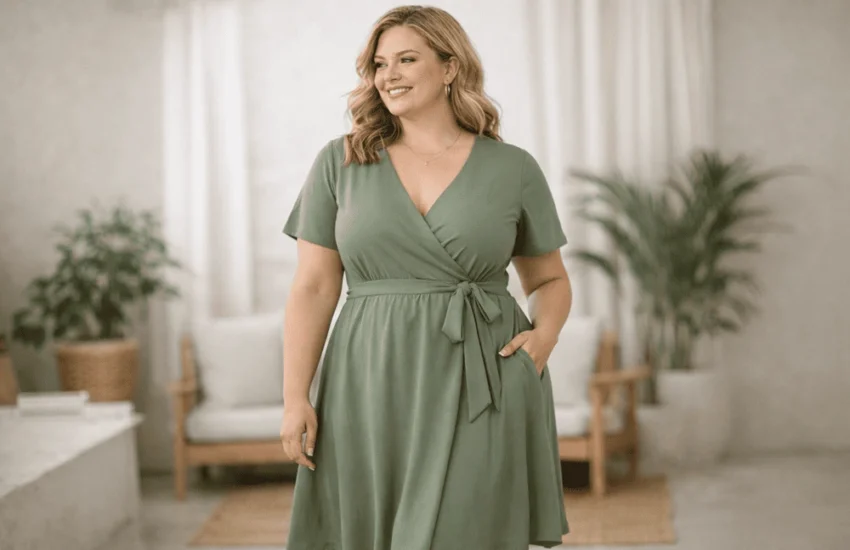
Adjusted Bust Placement: Seams and darts support fuller busts without gaping.
-
Defined Waist: Waistlines are proportioned to complement natural curves.
-
Hip Allowance: Extra space or stretch allows comfortable walking, sitting, and movement.
-
Thoughtful Stretch & Fabric: Stretch panels or draping fabrics prevent tugging in critical areas.
Once you understand your fit, selecting the right dress shape is easier. For ideas on flattering silhouettes, check Empire Waist, A-Line, or Wrap: Which Dress Shape Suits Which Curves.
How to Identify a Curvy-Friendly Dress
Look for these signs when shopping:
-
Smooth fit across bust and hips
-
Comfortable waistline that doesn’t pinch
-
Armholes and sleeves that allow free movement
-
Fabrics that drape naturally without clinging
If a dress requires constant adjusting or feels heavy, it’s likely designed for a straight or regular-size body.
Final Thoughts
The problem isn’t your body—it’s the dress. Choosing clothing that respects your proportions is the first step to comfort and confidence. A well-fitted dress should move with you, not against you.
For a broader perspective on fit, styling, and fabrics for plus-size dresses, see The Complete Guide to Plus-Size Dresses: Fit, Fabric & Styling and What “True Plus-Size Fit” Really Means (Not Just Bigger Measurements).