 Posted by
 Introduction
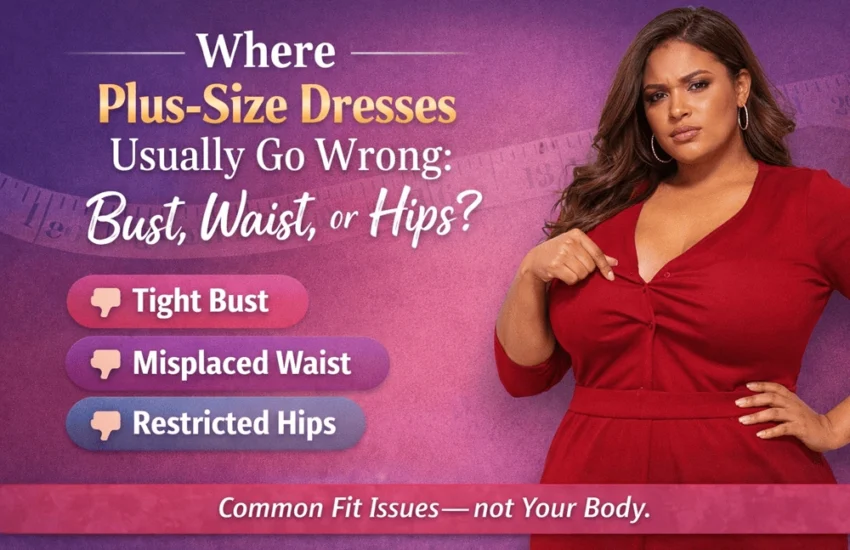
Many plus-size women try on a dress and immediately feel something is “off”, even when the size seems right. The problem usually isn’t the overall size, but where the fit breaks down. Most plus-size dresses fail in three key areas: bust, waist, or hips.
Understanding where a dress goes wrong helps you stop blaming your body and start choosing better-designed styles.
For a foundational understanding of fit, this blog works best alongside What “True Plus-Size Fit” Really Means (Not Just Bigger Measurements).
1. Bust: The Most Common Fit Problem
Bust fit is often the first area to fail in plus-size dresses.
How It Goes Wrong
-
Fabric pulls or stretches across the chest
-
Buttons gap or seams distort
-
Necklines sit too high or too low
This happens because many dresses aren’t designed for fuller bust projection—they’re just widened versions of straight-size patterns.
What Good Bust Fit Looks Like
-
Smooth fabric without pulling
-
Darts or shaping that support, not flatten
-
Neckline that sits naturally
Dress shapes like wrap or empire styles often handle bust fit better, as explained in Empire Waist, A-Line, or Wrap: Which Dress Shape Suits Which Curves.
2. Waist: Either Missing or Misplaced
The waist is where many plus-size dresses become shapeless—or uncomfortable.
How It Goes Wrong
-
Waist seam sits too high or too low
-
Dress looks boxy instead of shaped
-
Waist feels tight even when hips are loose
This happens when brands ignore natural curve placement and rely on generic measurements.
What Proper Waist Fit Feels Like
-
Waistline sits where your body naturally curves
-
No pinching or squeezing when sitting
-
Shape is visible without discomfort
If a dress makes you constantly adjust the waist, it’s a design flaw—not a body issue.
3. Hips: The Hidden Problem Area
Hip fit often shows up after movement, not in the fitting room.
How It Goes Wrong
-
Dress feels fine standing but tight while walking
-
Fabric rides up when sitting
-
Seams strain around thighs
This happens when dresses don’t allow for hip movement and ease, especially in pencil, bodycon, or straight-cut styles.
What Good Hip Fit Includes
-
Extra room or stretch for movement
-
Fabric that drapes instead of clings
-
No pulling across seams
This is especially important for everyday wear, which is discussed further in What “True Plus-Size Fit” Really Means (Not Just Bigger Measurements).
Why One Area Failing Ruins the Whole Dress
A dress can fail in just one area and still feel unwearable:
-
Perfect hips + tight bust = uncomfortable
-
Great bust + misplaced waist = shapeless
-
Good waist + tight hips = restricted movement
True plus-size fit means all three areas work together, not individually.
For a complete understanding of how fit, fabric, and design come together, refer back to The Complete Guide to Plus-Size Dresses: Fit, Fabric & Styling.
How to Diagnose Fit Problems Before Buying
Before purchasing (especially online), check:
-
Where seams sit on the model’s body
-
Whether the fabric stretches or drapes
-
Reviews mentioning bust, waist, or hip fit
-
Whether the dress is described as “curvy-fit” or “plus-size designed”
This saves you from buying dresses that look good on the hanger but fail in real life.
Final Thoughts
If a dress doesn’t fit at the bust, waist, or hips, the issue is design, not your body. Once you learn to identify where dresses usually go wrong, shopping becomes easier, faster, and far less frustrating.
Understanding fit is a skill, and you’re building it one step at a time.
For deeper clarity, continue with What “True Plus-Size Fit” Really Means (Not Just Bigger Measurements) and The Complete Guide to Plus-Size Dresses: Fit, Fabric & Styling.