 Posted by
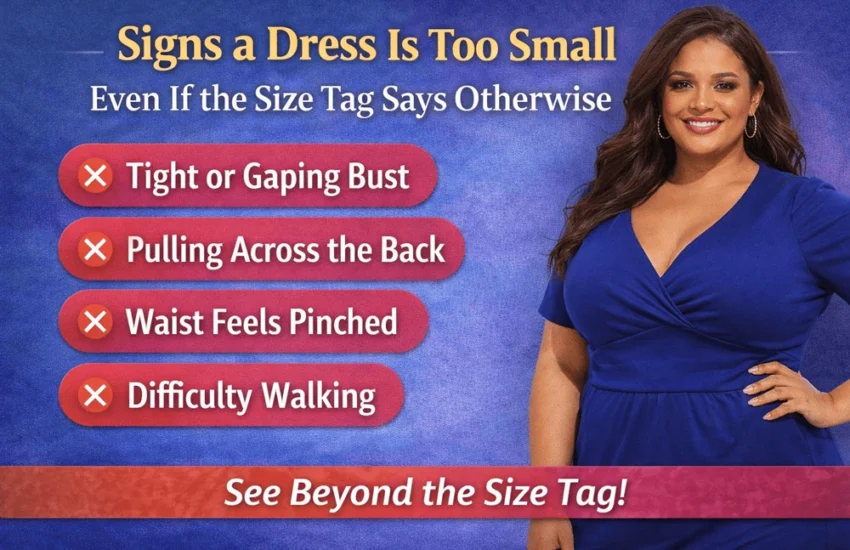
 Buying the “correct size” doesn’t always guarantee comfort for women with curves. Many plus-size dresses fit according to the size tag but fail in real life, leaving you tugging, adjusting, or feeling restricted.
Recognizing early signs of a dress being too small can save time, money, and frustration, and help you shop smarter.
If you haven’t yet, check out Best Fabrics for Plus-Size Dresses That Don’t Cling, Sag, or Feel Heavy to understand how fabric affects fit and comfort.
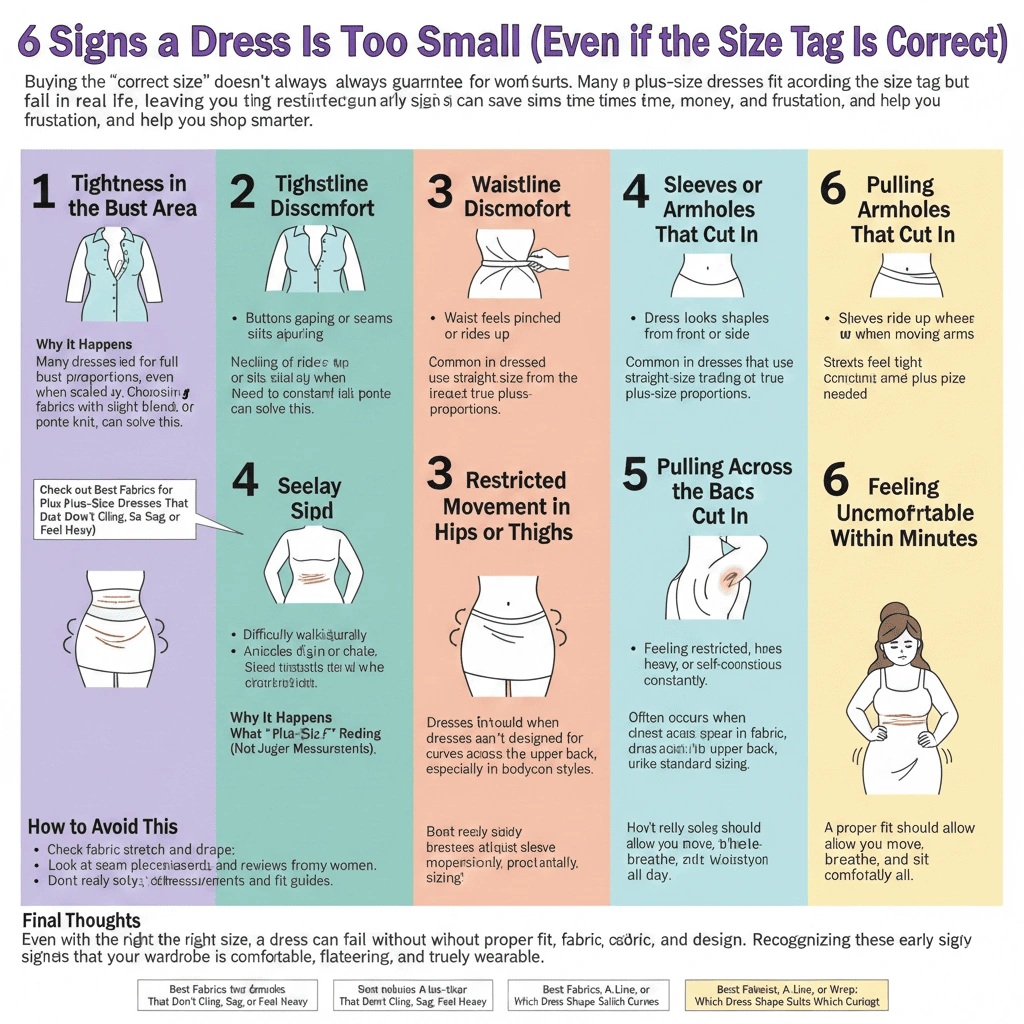
1. Tightness in the Bust Area
Even if the dress fits elsewhere, a tight bust is a clear warning.
Signs
-
Buttons gaping or seams pulling
-
Neckline rides up or sits awkwardly
-
Feeling of restriction when lifting arms
Why It Happens
Many dresses aren’t designed for full bust proportions, even when scaled up. Choosing fabrics with slight stretch, like viscose blends or ponte knit, can solve this, as discussed in Best Fabrics for Plus-Size Dresses That Don’t Cling, Sag, or Feel Heavy.
2. Waistline Discomfort
The waist is where sizing often lies.
Signs
-
Waist feels pinched or rides up
-
Dress looks shapeless from the front or side
-
Need to constantly adjust the waist
This is especially common in dresses that use straight-size grading instead of true plus-size proportions, which we explained in What “True Plus-Size Fit” Really Means (Not Just Bigger Measurements).
3. Restricted Movement in Hips or Thighs
Hip fit can often be overlooked when trying on a dress.
Signs
-
Difficulty walking naturally
-
Dress rides up when sitting
-
Seams feel tight or strain
Dresses should allow freedom of movement, as described in How Plus-Size Dresses Should Feel When They Fit Right.
4. Sleeves or Armholes That Cut In
Even with a perfect bust, poorly designed sleeves ruin fit.
Signs
-
Armholes dig in or chafe
-
Sleeves ride up when moving arms
-
Constant adjustments are needed
Curvy-fit dresses adjust sleeve dimensions proportionally to the body, unlike standard sizing.
5. Pulling Across the Back
A dress may seem fine from the front but pull at the back.
Signs
-
Horizontal lines across shoulder blades
-
Stretch marks appear in fabric
-
Back feels tight when sitting
This often occurs when dresses aren’t designed for curves across the upper back, especially in bodycon and fitted styles.
6. Feeling Uncomfortable Within Minutes
The ultimate test: if the dress makes you feel restricted, heavy, or constantly self-conscious within a few minutes, it’s too small.
A proper fit should allow you to move, breathe, and sit comfortably all day.
How to Avoid This
-
Check fabric stretch and drape: Viscose blends, crepe, and ponte knit are forgiving.
-
Look at seam placement and reviews from curvy women.
-
Don’t rely solely on size tags; check measurements and fit guides.
-
Pair this with style guidance from Empire Waist, A-Line, or Wrap: Which Dress Shape Suits Which Curves for optimal fit.
Final Thoughts
Even with the right size, a dress can fail without proper fit, fabric, and design. Recognizing these early signs ensures that your wardrobe is comfortable, flattering, and truly wearable.
For a broader understanding of plus-size dress fit and fabric choices, revisit:
-
Best Fabrics for Plus-Size Dresses That Don’t Cling, Sag, or Feel Heavy
-
How Plus-Size Dresses Should Feel When They Fit Right