 Posted by
 Even the best-designed plus-size dress can fail if the fabric is wrong. Many curvy women find that dresses cling to their stomachs, sag after a few hours, or feel uncomfortably heavy by the end of the day.
Fabric choice is not a small detail; it directly affects fit, comfort, durability, and confidence.
If you haven’t read it yet, start with How Plus-Size Dresses Should Feel When They Fit Right to understand why comfort matters as much as appearance.
Why Fabric Matters More for Curvy Bodies
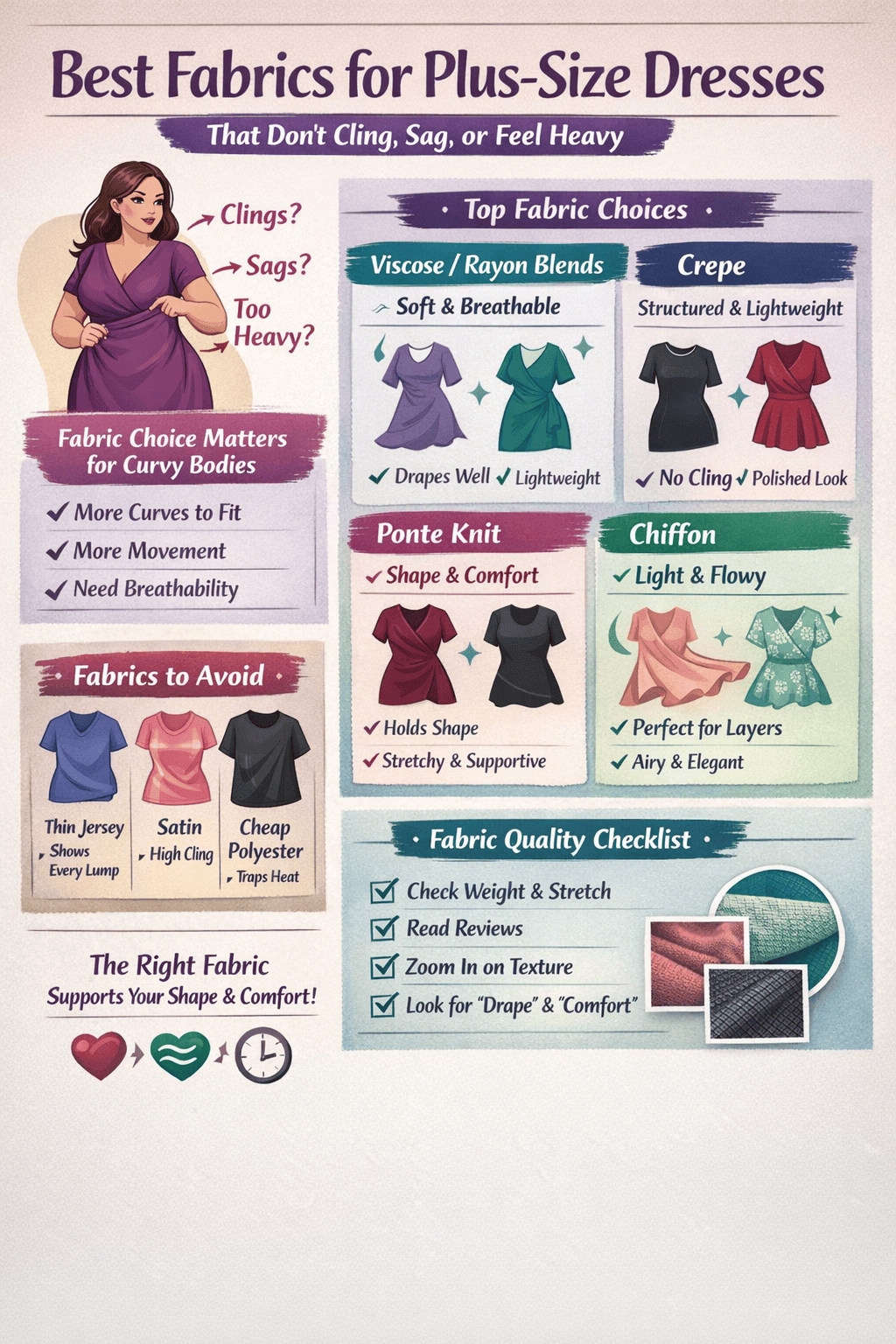
Curvy bodies naturally have:
-
More contact points (bust, waist, hips, thighs)
-
More movement throughout the day
-
Greater need for breathability and recovery
Fabrics that work on straight-size bodies often behave differently on curves, clinging, stretching out, or losing shape.
This connects closely with What “True Plus-Size Fit” Really Means (Not Just Bigger Measurements).
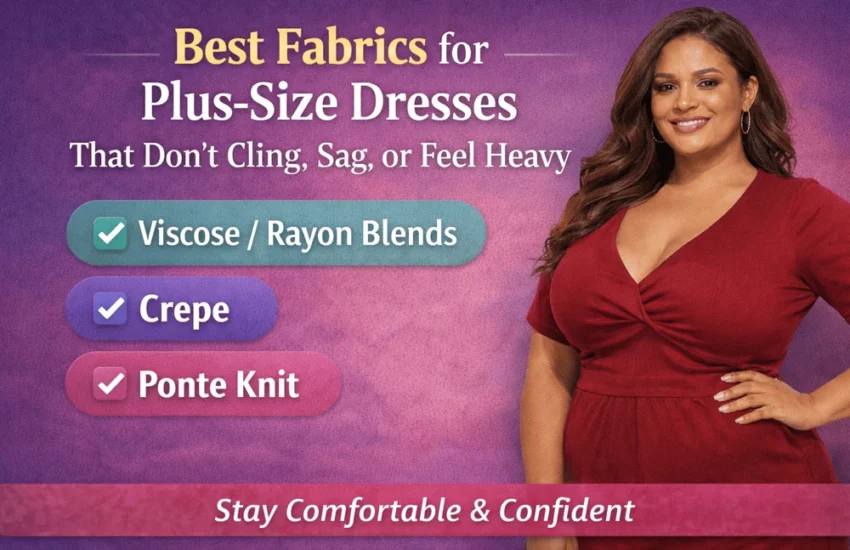
1. Viscose / Rayon Blends (Best for Everyday Wear)
Why They Work
-
Soft, breathable, and fluid
-
Drapes over curves instead of sticking
-
Lightweight without feeling flimsy
What to Watch
-
Pure viscose can wrinkle easily
-
Best when blended with elastane or polyester for recovery
Price context :
Well-made viscose-blend plus-size dresses usually fall in a mid-range price category, reflecting better drape and stitching quality.
2. Crepe (Excellent for Structure Without Weight)
Why It Works
-
Slight texture prevents clinging
-
Holds shape beautifully on curves
-
Feels light but looks polished
Crepe is ideal for:
-
Office wear
-
Semi-formal dresses
-
Structured silhouettes
Pairs well with styles discussed in Where Plus-Size Dresses Usually Go Wrong: Bust, Waist, or Hips? because it hides minor fit stress.
3. Ponte Knit (Best for Shape + Comfort Balance)
Why It Works
-
Thick enough to smooth curves
-
Stretchy without becoming see-through
-
Excellent shape retention
Works well for:
-
Bodycon and fitted midi dresses
-
Dresses that need support without compression
Price insight:
Ponte dresses are often priced slightly higher because they use dense, double-knit fabric, which lasts longer and resists sagging.
4. Chiffon (When Used Correctly)
Chiffon gets a bad reputation, but it can work beautifully when layered properly.
Why It Works
-
Lightweight and breathable
-
Adds movement without weight
-
Perfect for flowy silhouettes
What to Avoid
-
Single-layer chiffon (clings and shows everything)
-
Poor lining quality
Shines in empire and A-line styles explained in Empire Waist, A-Line, or Wrap: Which Dress Shape Suits Which Curves.
5. Fabrics That Usually Don’t Work (Be Careful)
Some fabrics consistently cause issues for curvy bodies:
-
Thin jersey (shows every line, stretches out)
-
Satin (high cling, low forgiveness)
-
Cheap polyester (traps heat, stiff drape)
These fabrics often look good in photos but fail in real-life movement, which is why understanding How Plus-Size Dresses Should Feel When They Fit Right is crucial.
How to Check Fabric Quality Before Buying Online
Before purchasing, look for:
-
Fabric weight mentioned in description
-
Stretch percentage or elastane content
-
Reviews mentioning “drape,” “cling,” or “comfort”
-
Close-up images showing texture
A dress that mentions fabric behavior, not just color, is usually better designed.
Final Thoughts
The right fabric:
-
Supports your curves
-
Moves with your body
-
Feels comfortable for hours
If a dress clings, sags, or feels heavy, the problem is often fabric, not your body.
For a full understanding of how fit, fabric, and styling work together, revisit The Complete Guide to Plus-Size Dresses: Fit, Fabric & Styling.