 Posted by
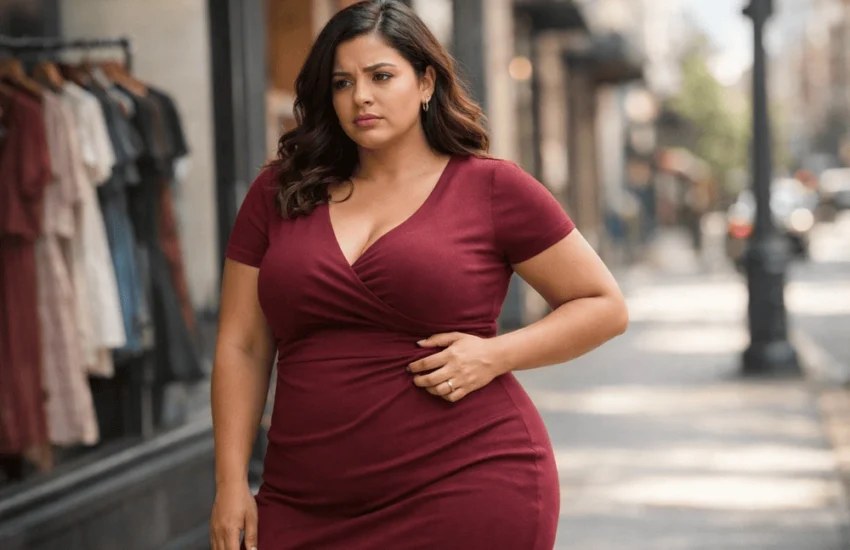
 Have you ever checked your reflection, loved your outfit while seated at brunch, but the moment you stood up, the fabric felt like it was suddenly “shrinking”?
This “standing-tightness” is a common mystery in plus-size fashion. While we usually worry about dresses being too tight when we sit (due to our bodies naturally expanding), the opposite – feeling restricted only while standing – is a sign of specific design and proportion issues.
Understanding this shift is the key to finding dresses that don’t just look good in a “sitting selfie,” but feel effortless all day long.
Before we dive in, if you’re new here, catch up on our pillar guide: Why Plus-Size Dresses Need More Than Just Extra Fabric to understand the science of curvy construction.
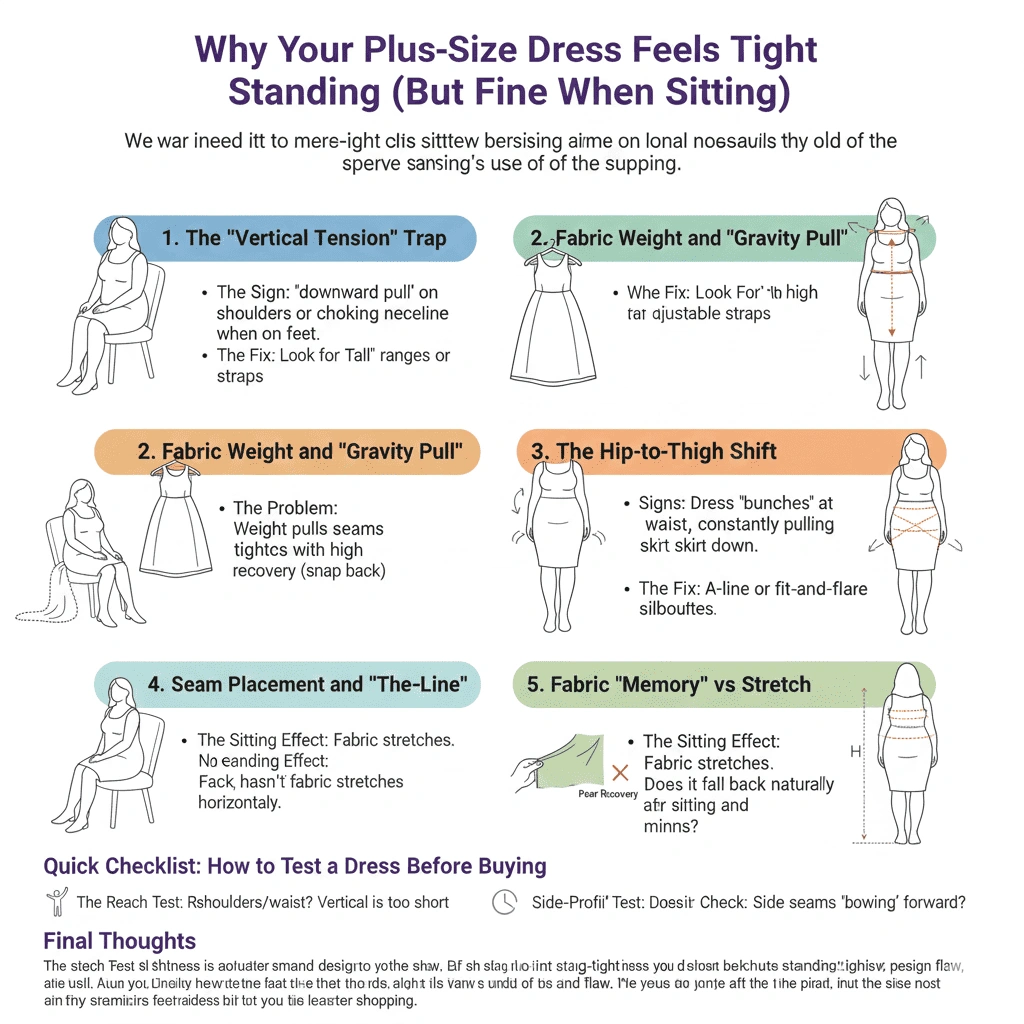
1. The “Vertical Tension” Trap
When you sit, the distance between your shoulders and your hips shortens. When you stand, your torso elongates. If a dress lacks “Vertical Ease” (the length from the shoulder to the waist), the fabric will pull taut against your bust and shoulders the moment you stand up.
-
The Sign: You feel a “downward pull” on your shoulders or the neckline feels like it’s choking you slightly when you’re on your feet.
-
The Fix: Look for brands that offer “Tall” ranges or have adjustable straps to accommodate a longer torso.
2. Fabric Weight and “Gravity Pull”
Heavy fabrics (like thick denim or heavy ponte) behave differently under the force of gravity. When you sit, the weight of the skirt rests on the chair. When you stand, the weight of the entire garment hangs from your shoulders and bust.
-
The Problem: The weight can cause the fabric to “bottom out,” pulling the seams tighter against your curves than they felt when the fabric was supported by a seat.
-
What to Look For: Choose fabrics with high recovery – materials that “snap back” rather than just stretching out and hanging heavy.
3. The Hip-to-Thigh Shift
In certain silhouettes, like pencil or sheath dresses, the fabric is designed to skim the body. When you sit, the fabric often “rides up” to the narrowest part of your legs. When you stand, the hem drops back down, potentially catching on the widest part of your thighs or hips.
-
Signs: The dress “bunches” at your waist when you stand and you find yourself constantly pulling the skirt down to make it feel comfortable.
-
The Fix: A-line or fit-and-flare silhouettes prevent this by providing “room to breathe” for your lower body regardless of your posture.
4. Seam Placement and “The H-Line”
Many plus-size dresses are still graded from “straight-size” patterns. These patterns often use a standard “H-line” (straight up and down). When you stand, your natural curves like the derriere or hips – protrude more than when you are seated and “flushed” against a chair.
-
The Technical Reason: If there aren’t enough darts (the small stitched folds that shape fabric) in the back of the dress, the fabric will stretch horizontally across your widest point only when you are standing upright.
5. Fabric “Memory” vs. Stretch
If your dress contains cheap elastic fibers, it might have great stretch but poor recovery.
-
The Sitting Effect: You sit down, the fabric stretches to accommodate you.
-
The Standing Effect: You stand up, but the fabric has “lost its memory” and hasn’t snapped back yet. This can create weird tension points or make the dress feel like it’s “clinging” in the wrong places.
For tips on spotting sizing issues early, check out the previous blog: Signs a Dress Is Too Small Even If the Size Tag Says Otherwise.
Quick Checklist: How to Test a Dress Before Buying
To avoid the standing-tightness trap, perform these three tests in the fitting room:
-
The Reach Test: Stand up and reach for the top shelf. If the dress restricts your shoulders or pulls significantly at the crotch/waist, the vertical length is too short.
-
The “Drop” Test: Sit for two minutes, then stand up. Does the dress fall back into place naturally, or do you have to shimmy it back down?
-
The Side-Profile Check: Look at your side profile in the mirror while standing. If the side seams are “bowing” forward, the dress is too tight across the back or hips.
Final Thoughts
A dress that feels tight while standing but fine sitting is usually a sign that the garment wasn’t designed for the 3D reality of a curvy body in motion. It’s a design flaw, not a “you” flaw.
Want more fit secrets? Read these next: