 Posted by
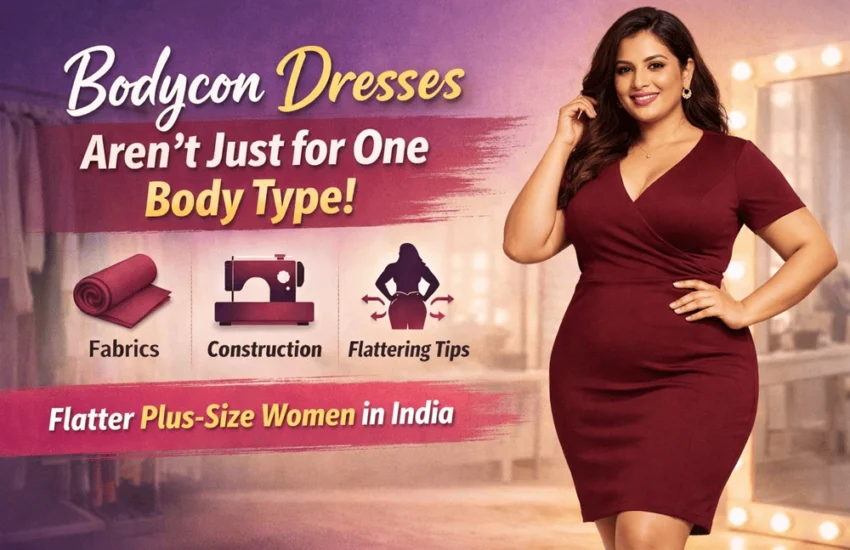
 Bodycon dresses have one of the worst reputations in the plus-size fashion industry. They’re often labeled as too revealing, too clingy, or only for certain body types. But in real life, bodycon dresses don’t fail because of bodies – they fail because of fabric choice, construction, and proportion.
If you’ve ever tried a bodycon dress that looked fine in the mirror but felt uncomfortable after sitting, walking, or wearing it for a few hours, this blog will explain why that happens.
Before diving in, it helps to understand how silhouettes affect curves. If you haven’t read it yet, start with Empire Waist, A-Line, or Wrap: Which Dress Shape Suits Which Curves.
Quick Answer
Bodycon dresses are not limited to certain body types. They work on curvy and plus-size bodies when the fabric supports movement, the length balances proportions, and the dress is designed for curves – not when it relies on thin stretch alone.
Why Bodycon Dresses Get a Bad Reputation
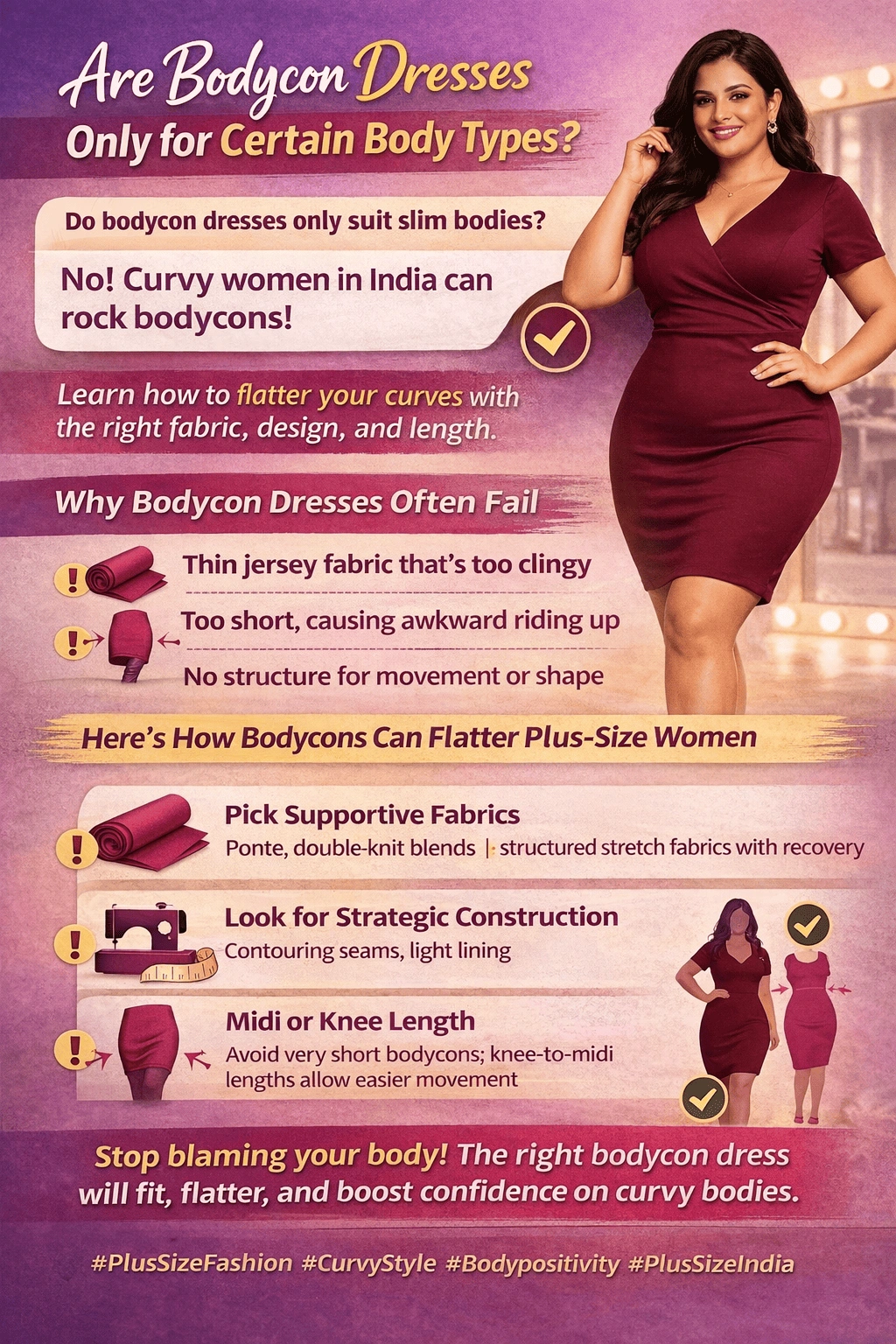
Most bodycon complaints come down to three problems:
- Dresses that cling instead of support
- Fabric that stretches out after a short time
- Designs scaled up from straight sizes without curve adjustments
These issues create discomfort, visible pulling, and sagging – especially around the tummy, hips, and thighs.
This connects closely with Tummy-Friendly Dress Styles That Don’t Look Shapeless, where we explained why comfort depends on design, not looseness.
What Actually Makes a Bodycon Dress Work on Curves
A good bodycon dress does not squeeze the body. Instead, it works with natural curves.
1. Fabric That Supports, Not Just Stretches
Thin jersey fabric stretches easily but offers no structure. This is why many bodycon dresses feel fine at first and uncomfortable later.
Fabrics that work better:
- Ponte knit
- Double-knit blends
- Structured stretch fabrics with recovery
These fabrics smooth curves without compression and hold their shape throughout the day.
2. Strategic Seams and Construction
Well-designed bodycon dresses often include:
- Vertical or curved seams
- Paneling that follows bust and hip contours
- Light lining or double layers
These elements prevent the dress from acting like a stretch tube, which is where most discomfort comes from.
If you’ve experienced pulling at the bust or hips, it’s often due to issues discussed in Where Plus-Size Dresses Usually Go Wrong: Bust, Waist, or Hips?
3. Length Matters More Than Tightness
Many plus-size women feel uncomfortable in bodycon dresses because of length, not fit.
- Very short lengths amplify cling
- Midi bodycon dresses create balance
- Knee-to-midi lengths allow easier movement
Length controls proportion, which is why this topic flows directly into Best Dress Lengths for Plus-Size Women: Knee, Midi, or Maxi?
Real-Life Wear: Standing vs Sitting vs Walking
In real wear, many plus-size women notice that bodycon dresses:
- Feel fine while standing
- Pull upward when sitting
- Shift during walking
This usually happens when the fabric lacks recovery or the dress has no structure to accommodate movement. It’s not a body issue — it’s a design limitation.
This mirrors the experience explained in Real Reasons Your Dress Feels Tight Standing but Fine Sitting.
Bodycon vs Other Silhouettes: A Clear Comparison
| Works Well | Fails Often |
|---|---|
| Ponte or double-knit fabric | Thin jersey fabric |
| Midi or knee-length bodycon | Very short bodycon |
| Structured seams | Seamless stretch tubes |
| Designed for curves | Straight-size patterns scaled up |
This contrast helps explain why some bodycon dresses feel empowering while others feel frustrating.
How to Tell If a Bodycon Dress Will Work Before Buying
Before purchasing, especially online, check for:
- Fabric weight or thickness mentioned
- Elastane blended with supportive fibers
- Close-up images showing seams or structure
- Reviews mentioning comfort after hours of wear
A bodycon dress that works only for photos but not movement is not well-designed.
Final Thoughts
Bodycon dresses are not about having a specific body type. They’re about how a dress behaves on a moving body.
When the fabric supports, the seams guide shape, and the length balances proportions, bodycon dresses can be comfortable, flattering, and confidence-boosting on curvy bodies.
If a bodycon dress doesn’t work, don’t blame your body. Look at the design.
Next, we’ll break down how dress length changes fit, comfort, and movement – often more than tightness itself.
Continue reading: Best Dress Lengths for Plus-Size Women: Knee, Midi, or Maxi?