 Posted by
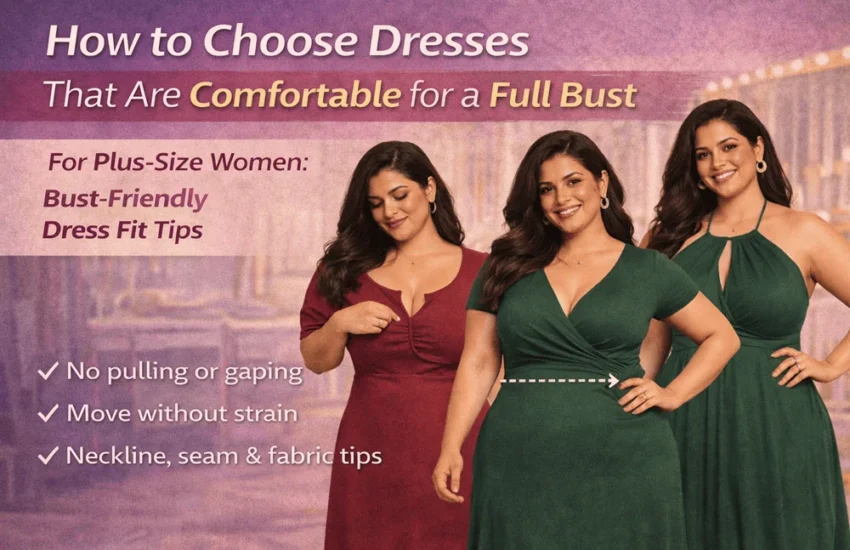
 If you have a fuller bust, you’ve probably experienced this: a dress technically fits your size, but it feels tight across the chest, pulls at the buttons, rides up, or feels uncomfortable after a few hours.
This isn’t because your body is difficult to dress. It’s because most dresses aren’t designed with bust proportion in mind, especially in plus-size ranges.
In this guide, we’ll break down what actually makes a dress comfortable for a full bust, based on real wear, movement, and design, not fashion rules.
Quick Answer
Dresses are comfortable for a full bust when they allow enough room at the chest without pulling fabric upward, use supportive construction, and balance the bust with the rest of the body through seams, necklines, and fabric choice.
Why Full Bust Fit Is Often a Problem
Most plus-size dresses are created by scaling up straight-size patterns. When this happens:
- Bust space doesn’t increase proportionally
- Armholes become tight
- Fabric pulls upward from the chest
This leads to issues at the waist, tummy, and hips, even when those areas aren’t the problem.
This connects closely with Where Plus-Size Dresses Usually Go Wrong: Bust, Waist, or Hips?
Signs a Dress Isn’t Bust-Friendly (Even If the Size Is Right)
A dress may look fine on a hanger but fail on a full bust if you notice:
- Pulling or strain lines across the chest
- Necklines sitting higher than intended
- The hem lifting at the front
- Discomfort while sitting or breathing deeply
These are design issues, not sizing failures.
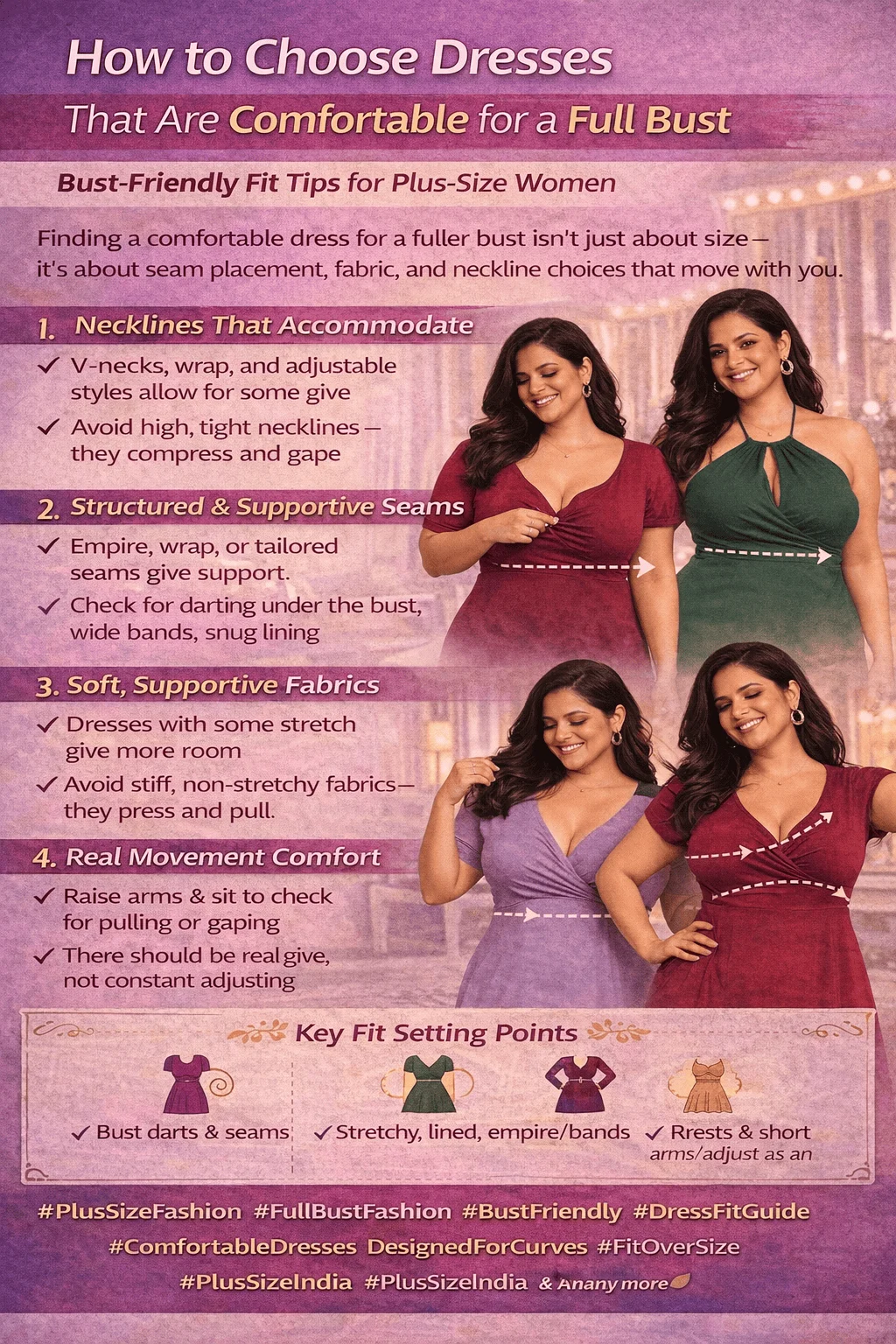
Necklines That Work Better for a Full Bust
The right neckline can dramatically improve comfort.
Bust-Friendly Necklines
- V-neck
- Wrap styles
- Scoop necks with structure
- Sweetheart necklines
These create space and prevent fabric from sitting directly on the fullest part of the bust.
Necklines That Often Cause Discomfort
- High crew necks
- Boat necks with no stretch
- Straight strapless styles
The problem isn’t coverage, it’s lack of shaping.
Seams and Construction Matter More Than Stretch
Stretch alone does not equal comfort.
Look for:
- Princess seams or bust darts
- Paneling that follows chest curves
- Light lining for support
Dresses without bust shaping behave like fabric tubes, which is why they pull upward.
This ties into Why Plus-Size Dresses Need More Than Just Extra Fabric.
Fabric Choices That Feel Better on a Full Bust
Fabrics that work well:
- Ponte knit
- Structured stretch blends
- Soft woven fabrics with shaping
Fabrics that often fail:
- Thin jersey
- Stiff, non-stretch woven fabric with no darts
The key is support with recovery, not cling.
How Bust Fit Affects the Rest of the Dress
When a dress is tight at the bust:
- The waist appears higher
- The tummy area feels tighter
- The hemline lifts unevenly
This creates the illusion of poor fit everywhere even when the only issue is the chest.
Standing vs Sitting vs Walking: Real-Life Comfort
Bust-related fit problems become obvious in motion:
- Sitting causes strain across the chest
- Walking makes the dress shift upward
- Long wear leads to constant adjusting
This mirrors what we discussed in Real Reasons Your Dress Feels Tight Standing but Fine Sitting.
How to Check Bust Fit Before Buying Online
Before purchasing, check:
- Model pose (are arms crossed or relaxed?)
- Close-up photos of the bust area
- Reviews mentioning chest comfort
- Fabric composition and seam details
Avoid dresses that rely only on stretch with no visible shaping.
Final Thoughts
A full bust does not make dresses uncomfortable, poor design does.
When a dress allows space at the chest, supports curves with seams, and balances proportions, it feels comfortable all day without constant adjustment.
If a dress doesn’t work, don’t blame your body. Look at how it’s made.
Next, we’ll explore what makes a dress truly comfortable for curvy bodies overall, not just one area.
Continue reading: What Makes a Dress Comfortable for Curvy Bodies