 Posted by
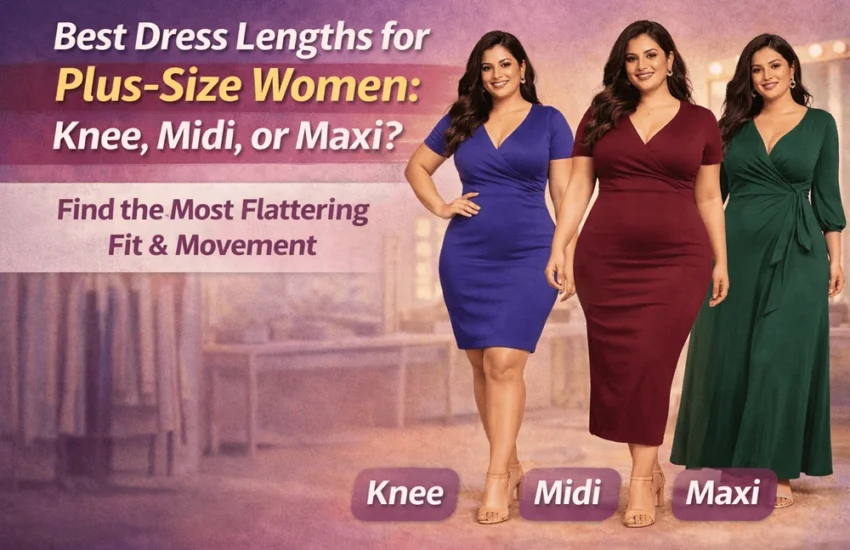
 When plus-size women talk about a dress feeling uncomfortable, awkward, or unflattering, the issue is often blamed on tightness or body shape. In reality, dress length plays a much bigger role than most people realize.
The same dress can feel confident at one length and restrictive at another. It can flatter curves or fight them without changing size at all.
In this guide, we’ll break down knee-length, midi, and maxi dresses from a real-wear perspective: movement, proportions, comfort, and everyday practicality for curvy bodies.
Quick Answer
There is no single “best” dress length for plus-size women. The right length depends on where the dress ends on your leg, how the fabric moves, and how it balances your curves—not on height or size alone.
Why Dress Length Matters More Than You Think
Dress length affects:
- How fabric pulls when you sit or walk
- Whether the hem rides up
- How your hips, thighs, and calves visually balance
- How comfortable you feel throughout the day
Many fit issues blamed on tightness are actually length-related proportion problems – something we also touched on in Are Bodycon Dresses Only for Certain Body Types?
Knee-Length Dresses: Structured and Practical
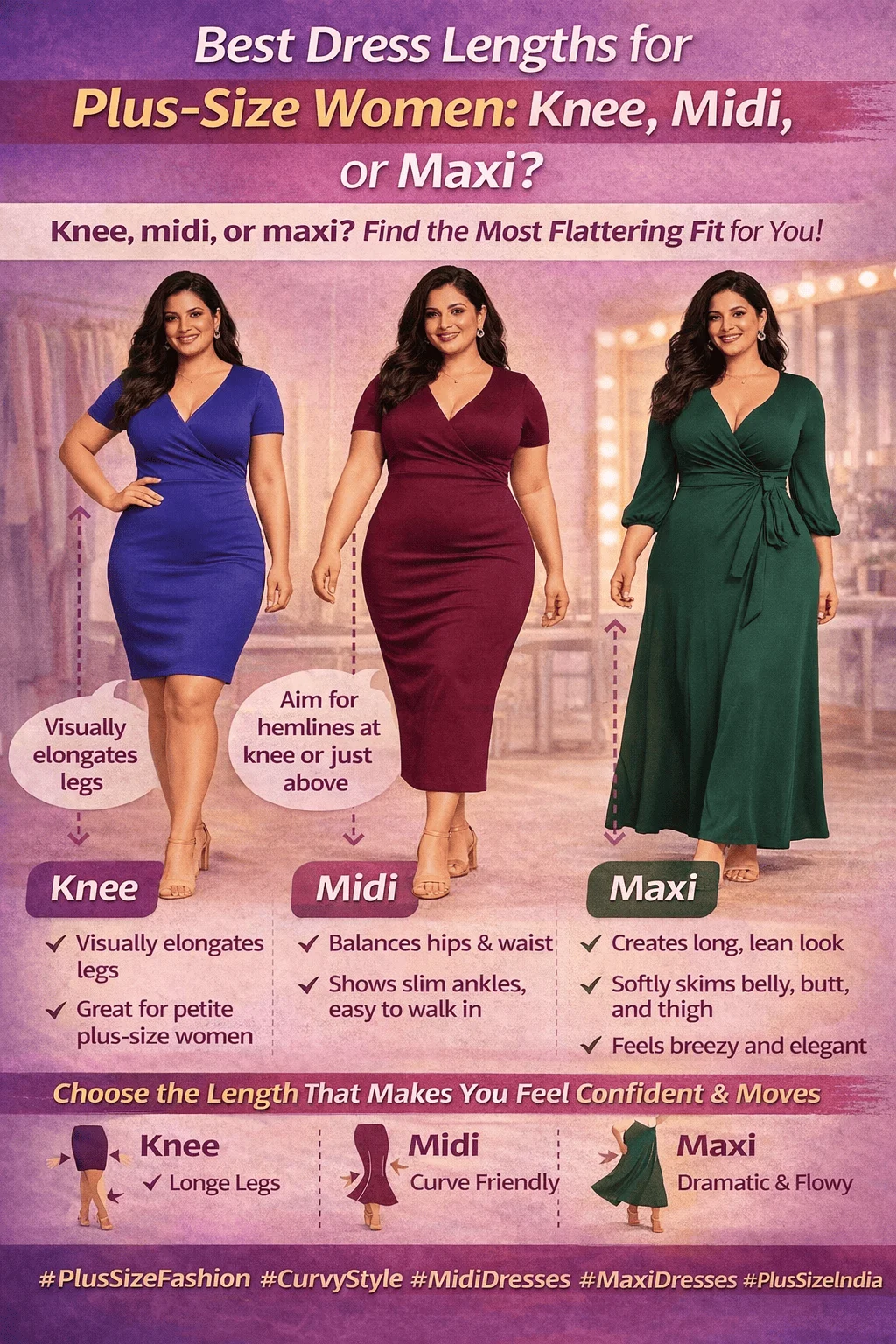
Knee-length dresses usually hit just at or slightly above the knee. When designed well, they offer structure and ease of movement.
When Knee-Length Works Well
- You want a polished, work-friendly look
- The dress has some structure (not flimsy fabric)
- The hem hits at the narrowest part of your knee
Common Problems with Knee-Length
- Too short = constant riding up
- Too stiff = restricted walking
- Poorly placed hem = cuts the leg visually
Knee-length dresses work best when the fabric has some weight and recovery, especially around the hips and thighs.
This length pairs well with styles discussed in Work-Friendly Plus-Size Dresses That Don’t Dig or Ride Up.
Midi Dresses: The Most Balanced Option for Curves
Midi dresses typically fall between the knee and ankle. For many plus-size women, this length offers the best balance of comfort and proportion.
Why Midi Length Is So Flattering
- Reduces hem riding during movement
- Balances hips and thighs visually
- Works well with both fitted and flowy silhouettes
Watch Out For
- Hem landing at the widest part of the calf
- Ultra-clingy fabrics with no structure
A well-designed midi dress moves with the body instead of shifting upward, which is why midi lengths often feel more comfortable than shorter dresses even when they’re fitted.
This connects closely with Tummy-Friendly Dress Styles That Don’t Look Shapeless.
Maxi Dresses: Comfort Depends on Fabric and Cut
Maxi dresses are often assumed to be the most forgiving—but that’s not always true.
When Maxi Dresses Work Beautifully
- Fabric drapes without clinging
- The dress has waist definition or shaping
- The hem doesn’t drag or bunch
Common Maxi Issues
- Heavy fabric pulling downward
- Excess fabric adding bulk
- Tripping or restricted stride
Maxi dresses work best when the fabric flows rather than stretches thin. This is especially important for daily wear and warm climates, which we explore further in Best Plus-Size Dresses for Indian Summers.
How Height Changes Dress Length (But Not the Way You Think)
Height matters but not as much as proportion.
- Shorter women may prefer midi lengths that don’t overwhelm
- Taller women still need proper hem placement
- Everyone benefits from balanced seam placement
We’ll explore this in more depth in Short, Curvy, or Tall? How Height Changes Dress Fit.
Real-Life Movement Test: Standing vs Sitting vs Walking
A good dress length should:
- Stay in place when sitting
- Not pull upward while walking
- Allow natural leg movement
If a dress feels fine standing but uncomfortable later, then length, not size is often the issue. This mirrors the experience explained in Real Reasons Your Dress Feels Tight Standing but Fine Sitting.
How to Choose the Right Length Before Buying
Before purchasing, especially online, check:
- Model height and where the hem falls
- Fabric weight and drape
- Reviews mentioning movement or riding
Length that looks good in photos but fails in motion is a design issue not a body issue.
Final Thoughts
The best dress length for plus-size women isn’t about hiding the body or following rules. It’s about how a dress behaves on a moving, real body.
Knee, midi, and maxi lengths can all work when the fabric supports movement, the hem balances proportions, and the design is made for curves.
If a dress doesn’t feel right, don’t blame your body. Look at the length.
Next, we’ll explore how height, curves, and proportions work together to affect fit.
Continue reading: Short, Curvy, or Tall? How Height Changes Dress Fit